SAVE $200 TODAY (LIMITED TIME)
HOW DAY TRADERS "READ THE TAPE" FOR CONSISTENT PROFITS
For decades, "tape reading" was the skill nobody on Wall Street wanted to explain.
It had an air of mystery to it — something the old floor guys just had, developed after years of watching the ticker scroll across the bottom of the screen.
Most traders still believe it's out of reach.
Here's what they don't know: you're already doing it.
Every time you enter a trade and watch whether price moves toward your target or against your entry — that's tape reading. You're measuring separation from a reference point. That's it. That's the whole skill.
What most traders don't know is that you can apply that same logic to a higher timeframe — specifically Monday's opening price and the calendar month's open — to determine whether institutional buying pressure is behind the same setup you're already looking at on the daily chart.
When those higher timeframes align with your daily criteria, conviction changes. Position size changes. How long you hold changes. Whether you add to the trade changes.
Not every setup is the same. The traders who figure out how to tell the difference — that's where real edge lives.
I put together a full breakdown of how this works — what I call the Probability Boosters — including the exact two-timeframe check my traders ran every morning before the open.
P.S. This isn't advanced theory. It's a 60-second check that changes what you do with a trade once you're in it. Worth knowing.
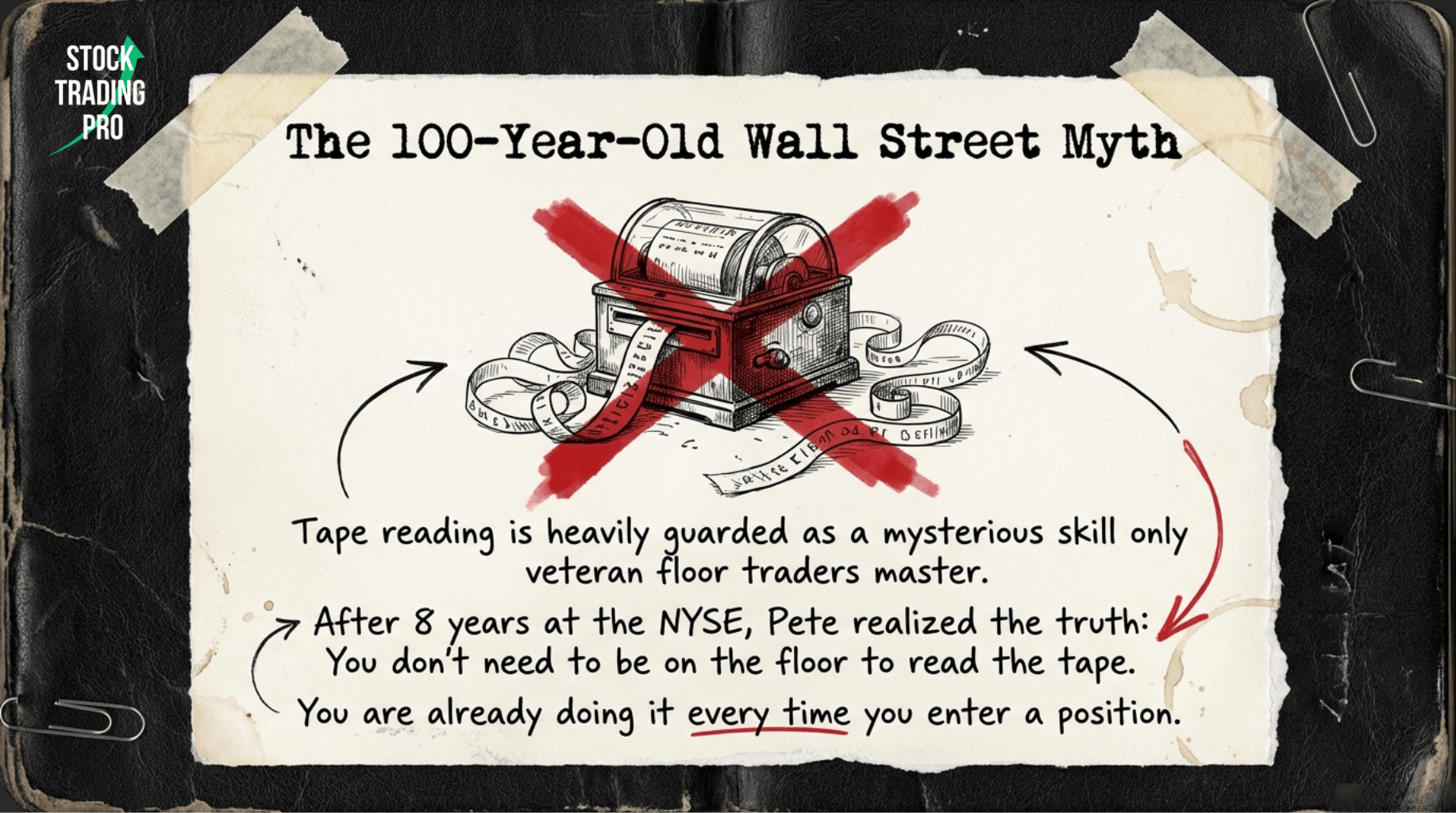
Tape Reading Demystified: Pete deconstructs the myth that tape reading is a mysterious floor-trader skill.
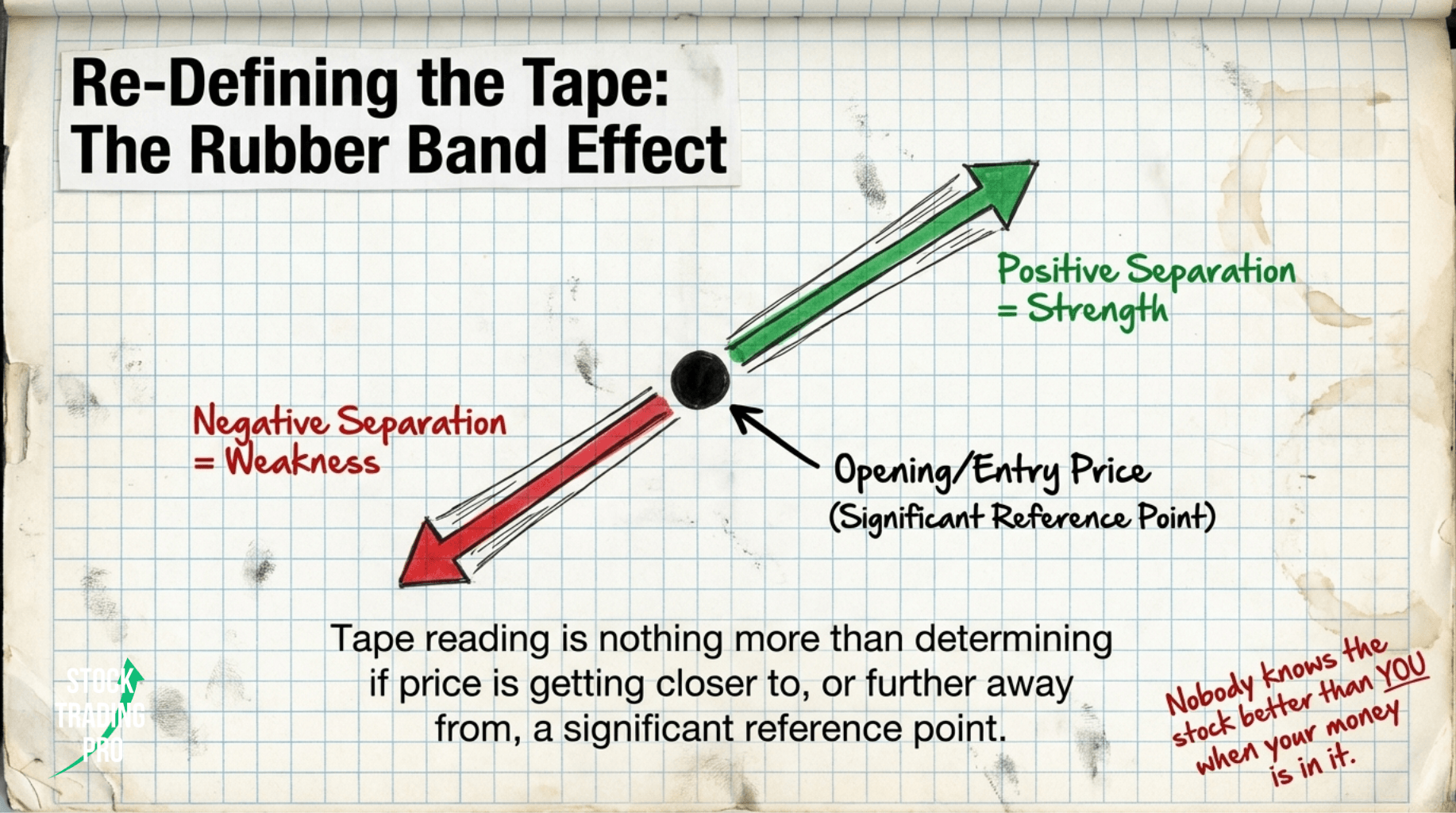
His definition: tape reading is simply measuring whether price is getting closer to or further away from a significant reference point. Every trader is already doing it — they just don't know it by that name.
The Significant Reference Point Concept
The core mechanic behind tape reading. A significant reference point is any price anchor — your entry, the open, a moving average — from which you measure separation. Positive separation = strength. Negative separation = reassess.
The Risk of Getting Lost in Advanced Concepts
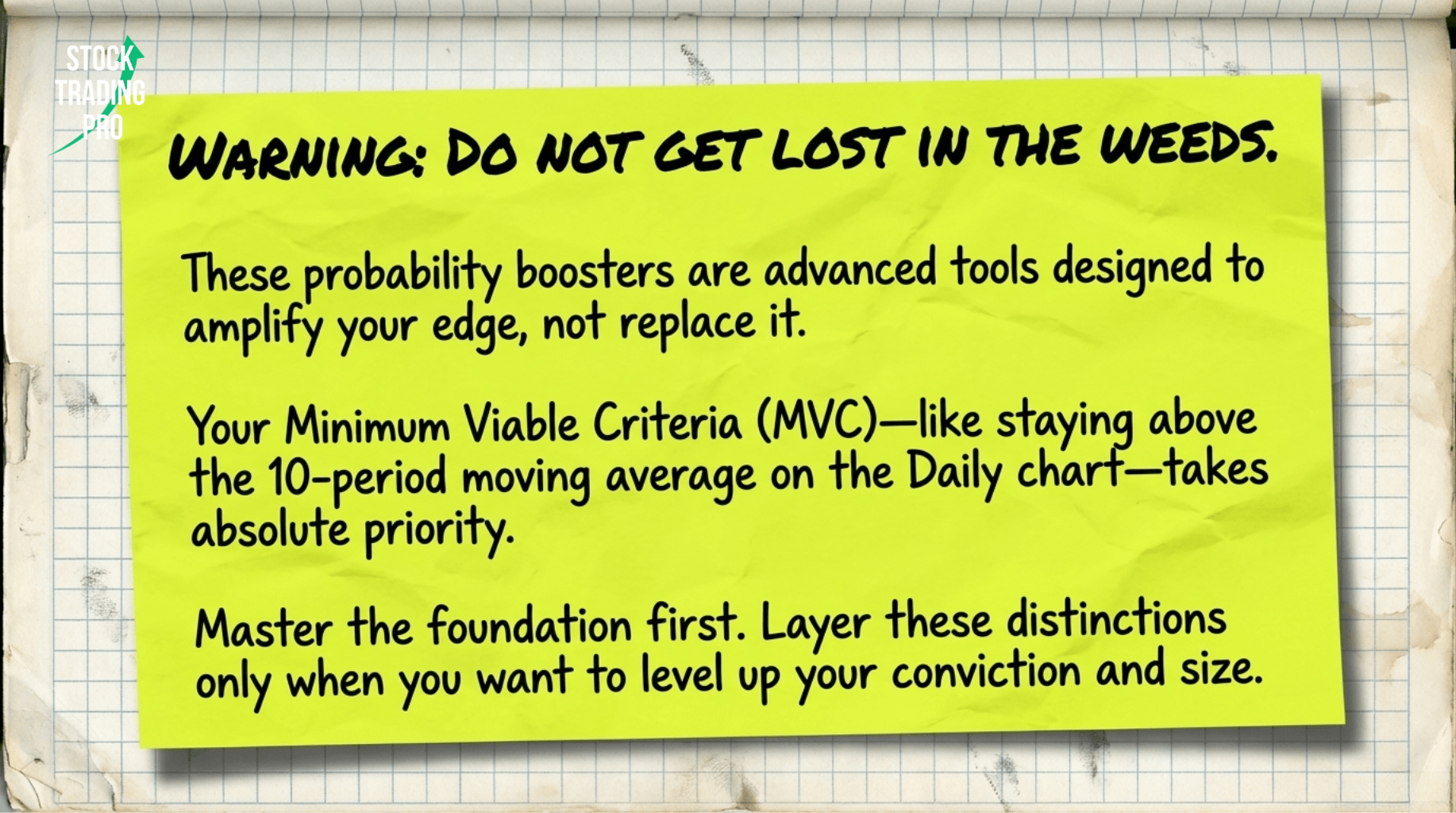
Pete spends significant time warning traders not to over-index on probability boosters at the expense of core mechanics. He frames skill development like education levels — high school through college — and positions this module as the upper end of that progression.
The Weekly Candlestick
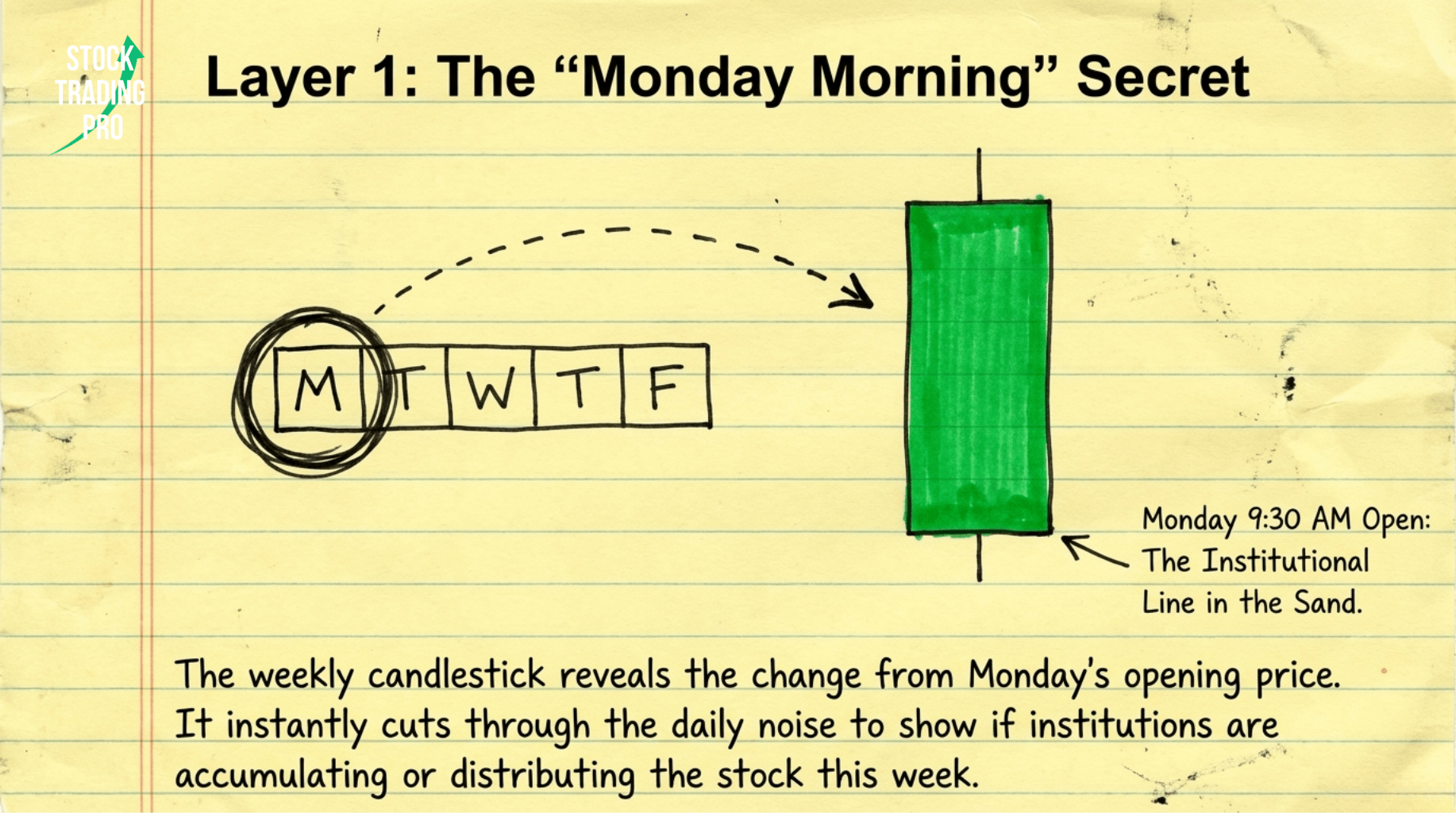
Monday's Opening Price as Order Flow Validator
The first concrete probability booster. Monday's opening price on the weekly chart becomes a reference point for the entire week's institutional buying or selling pressure. If the stock is trading above Monday's open, weekly order flow is positive, a tailwind for long setups.
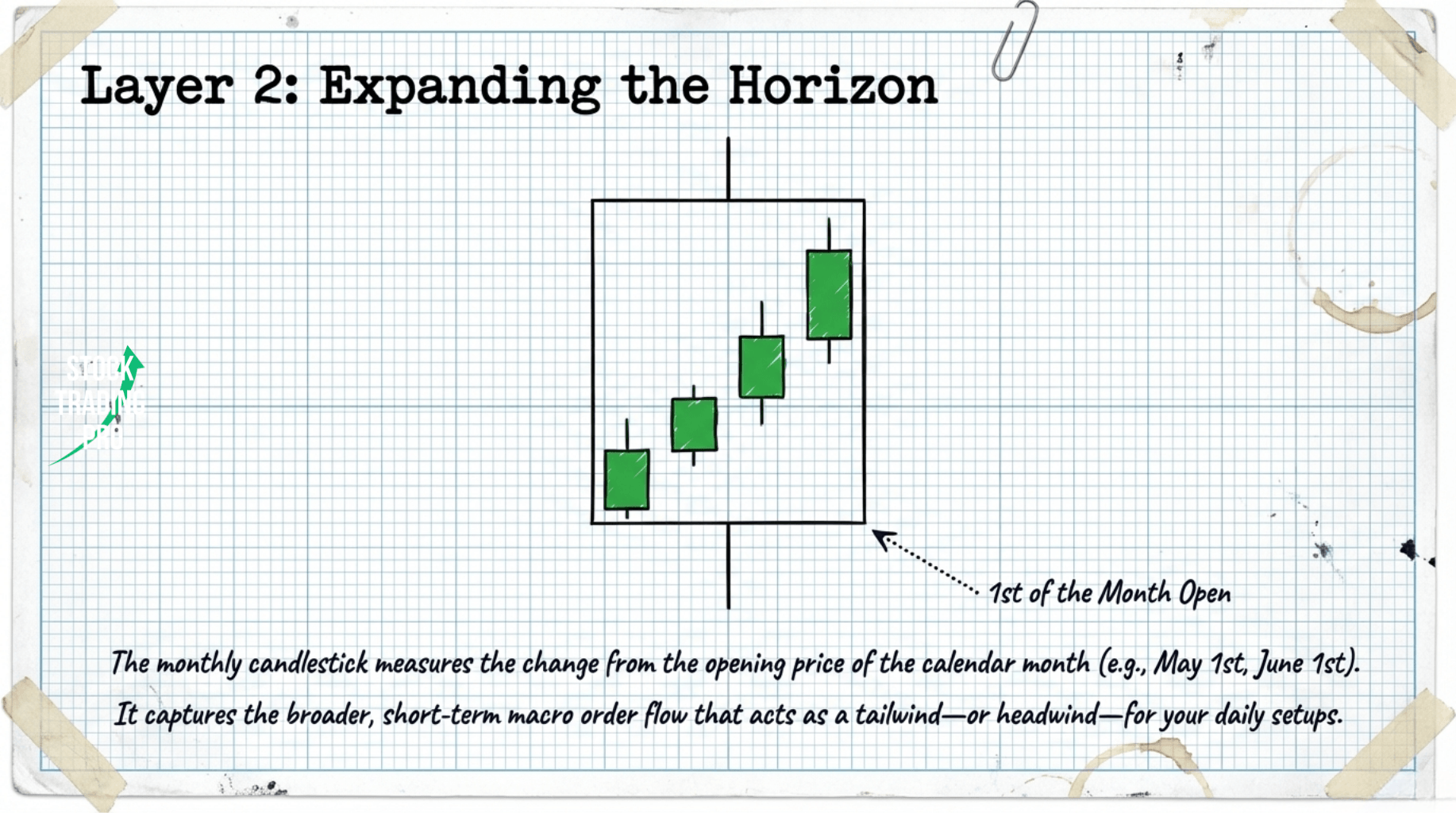
The Monthly Candlestick / Calendar Month Opening Price
The second probability booster. Same concept applied to the monthly timeframe. The opening price of the calendar month (January 1st, February 1st, etc.) reveals whether institutional participants are net buyers or sellers for that month.
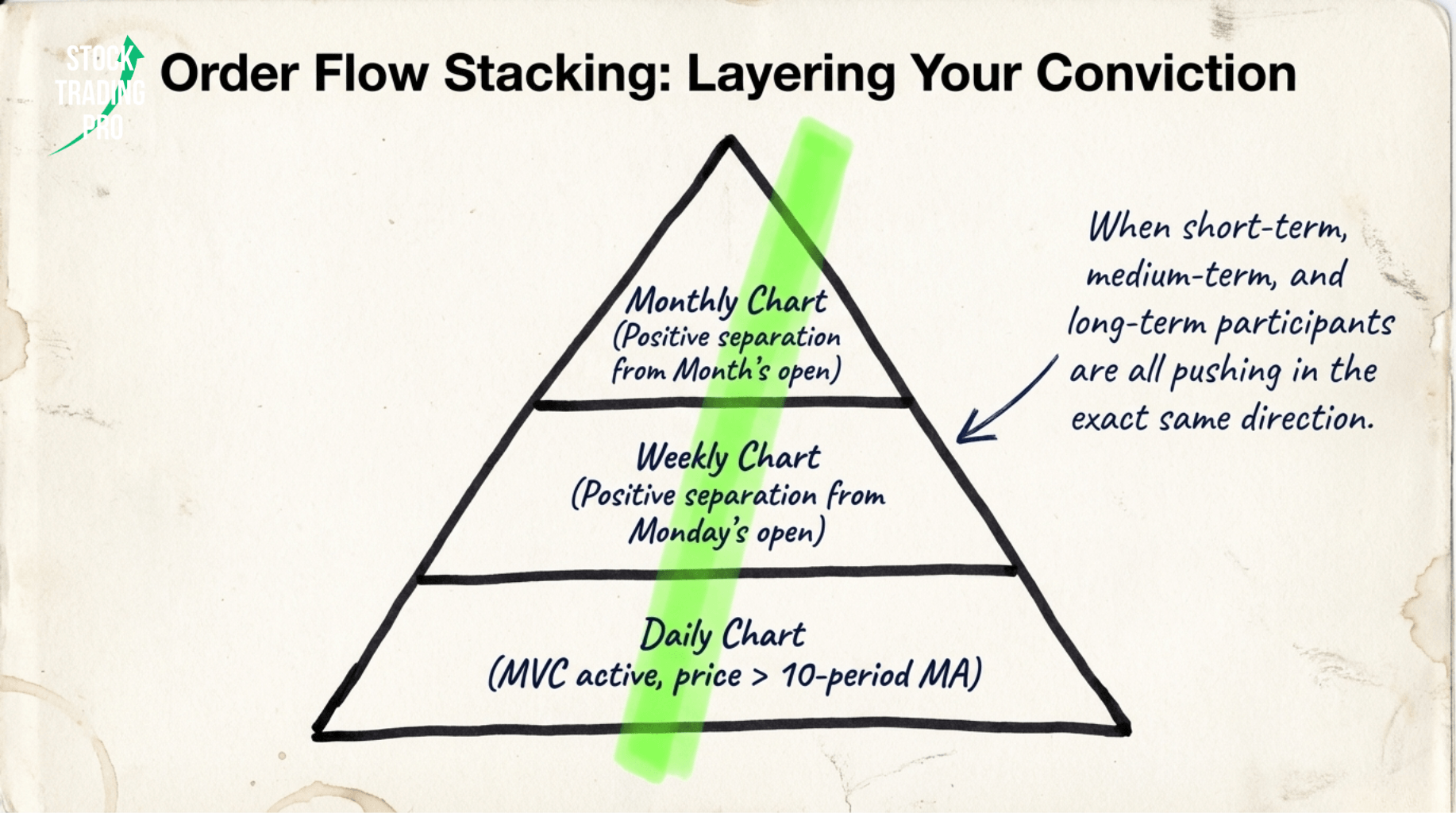
Order Flow Stacking and the Power Pyramid
Introduced as the overarching framework for this section. Order flow stacking is how multiple signals in alignment amplify conviction in a trade idea. The Power Pyramid is the visual model for how these layers build on each other.
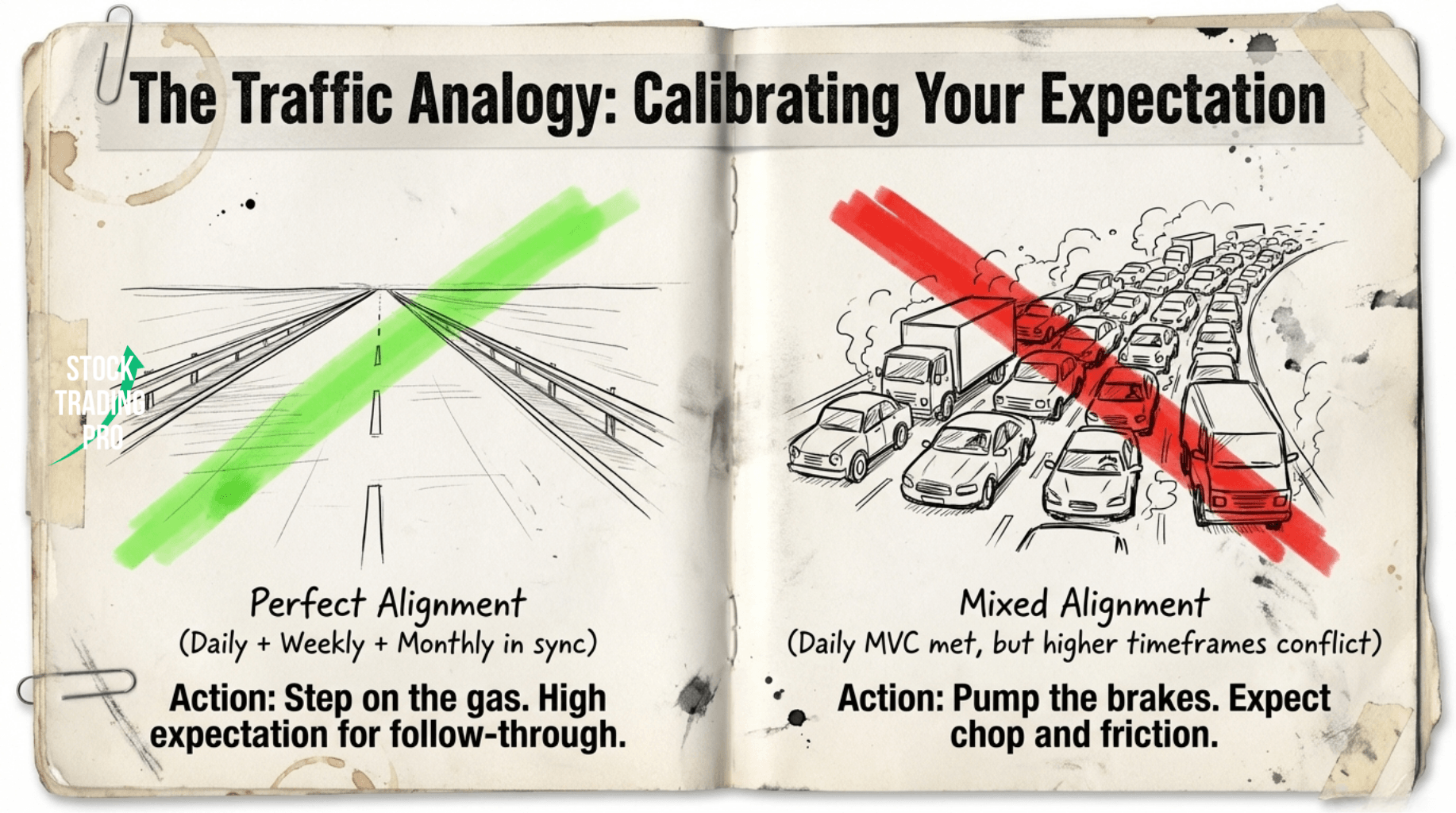
Every Trade Is Not the Same — Conviction Calibration
Pete builds the case that traders must develop the ability to distinguish between ordinary setups and high-conviction setups. The "open road vs. stop-and-go traffic" analogy illustrates how the same strategy performs differently depending on market conditions.
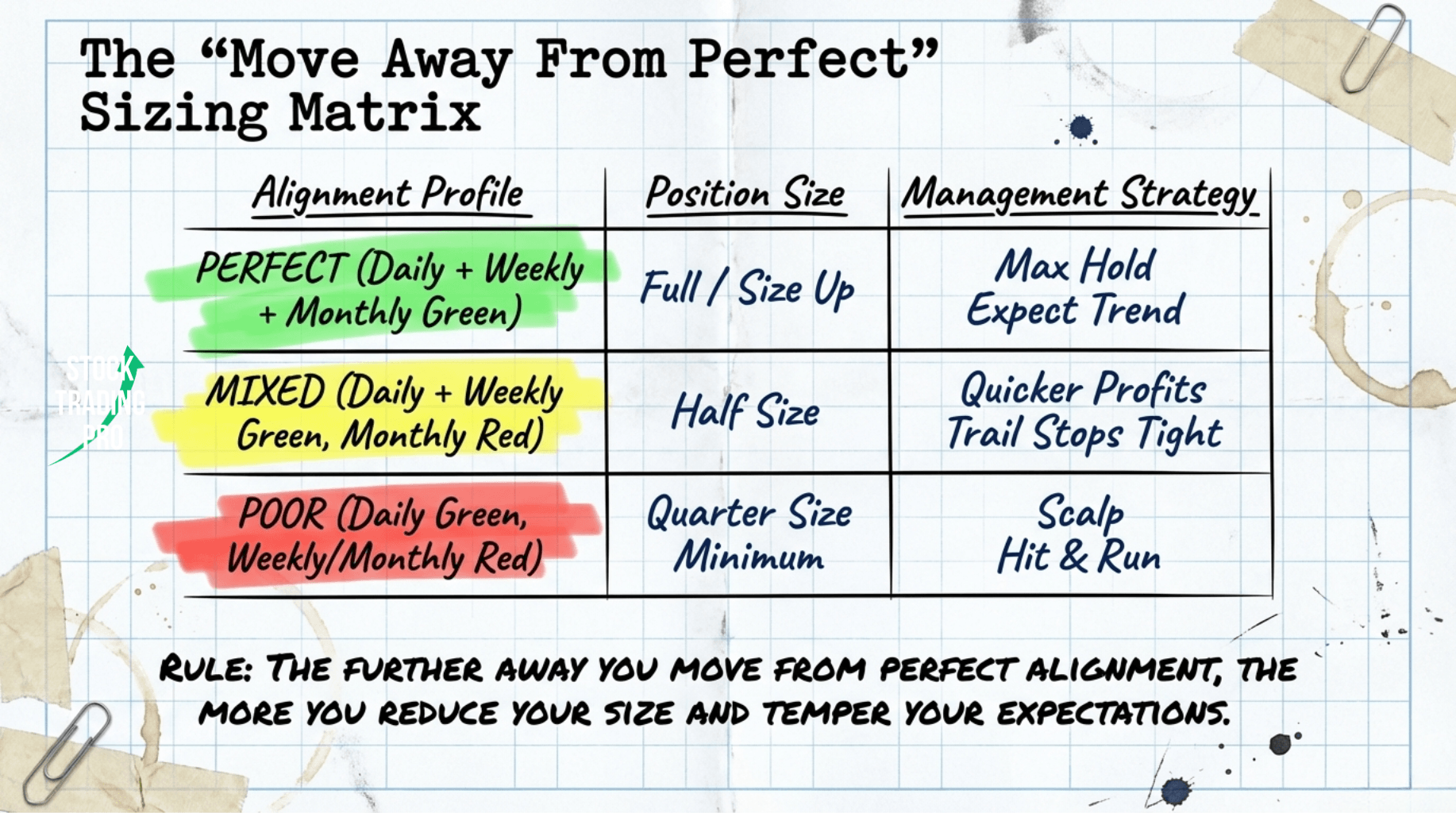
The "Move Away From Perfect" Position Sizing Framework
One of the most actionable concepts in the module. As conditions move further from perfect alignment, position size should adjust downward. When conditions stack perfectly, size up. This makes position sizing an objective, condition-based decision rather than an emotional one.
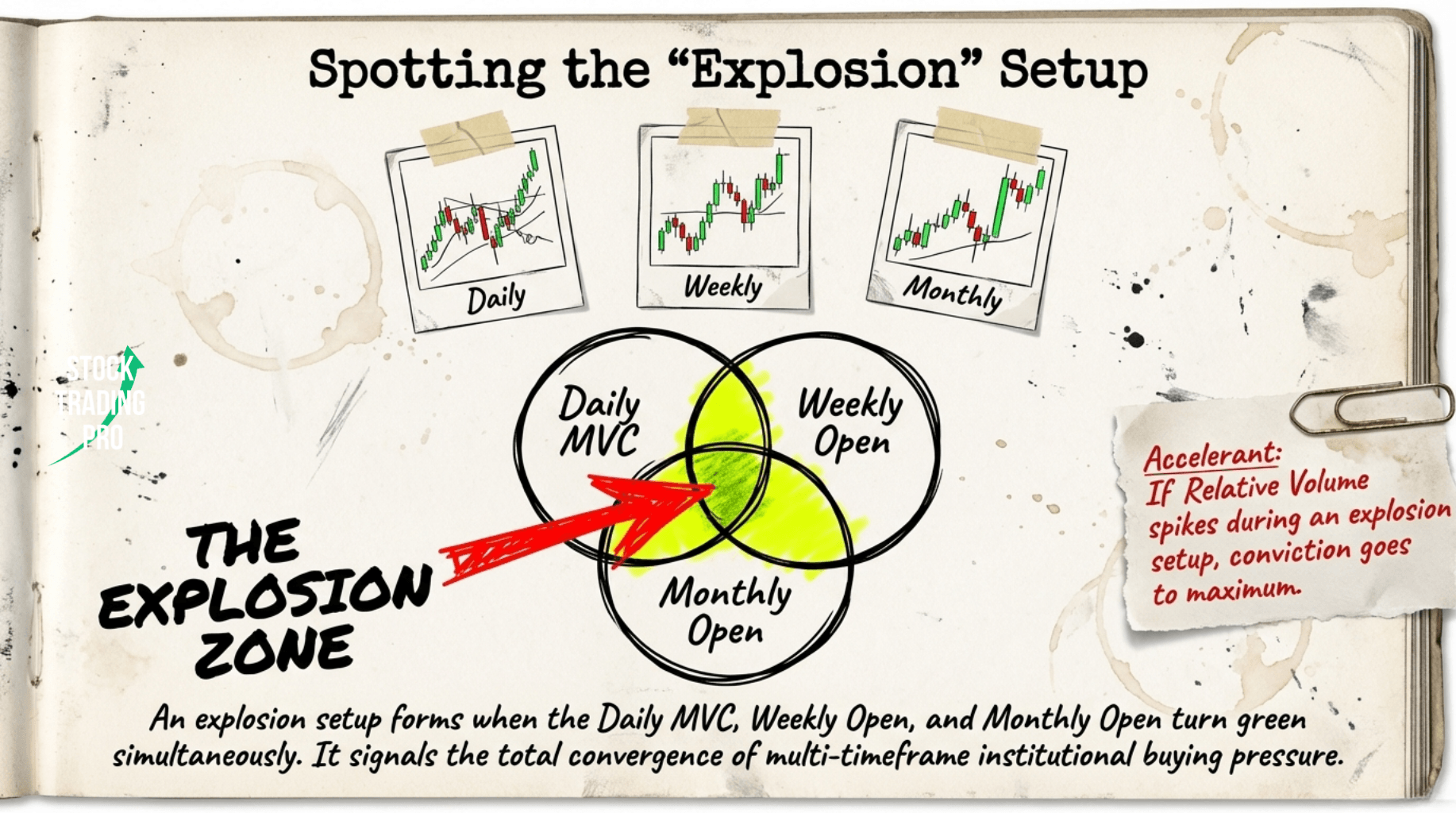
Spotting The Explosion Zone
When the daily minimum viable criteria, the weekly candlestick signal, AND the monthly candlestick signal all point in the same direction, conviction reaches its highest level. This confluence is what produces the "explosion" moves Pete references throughout the module.
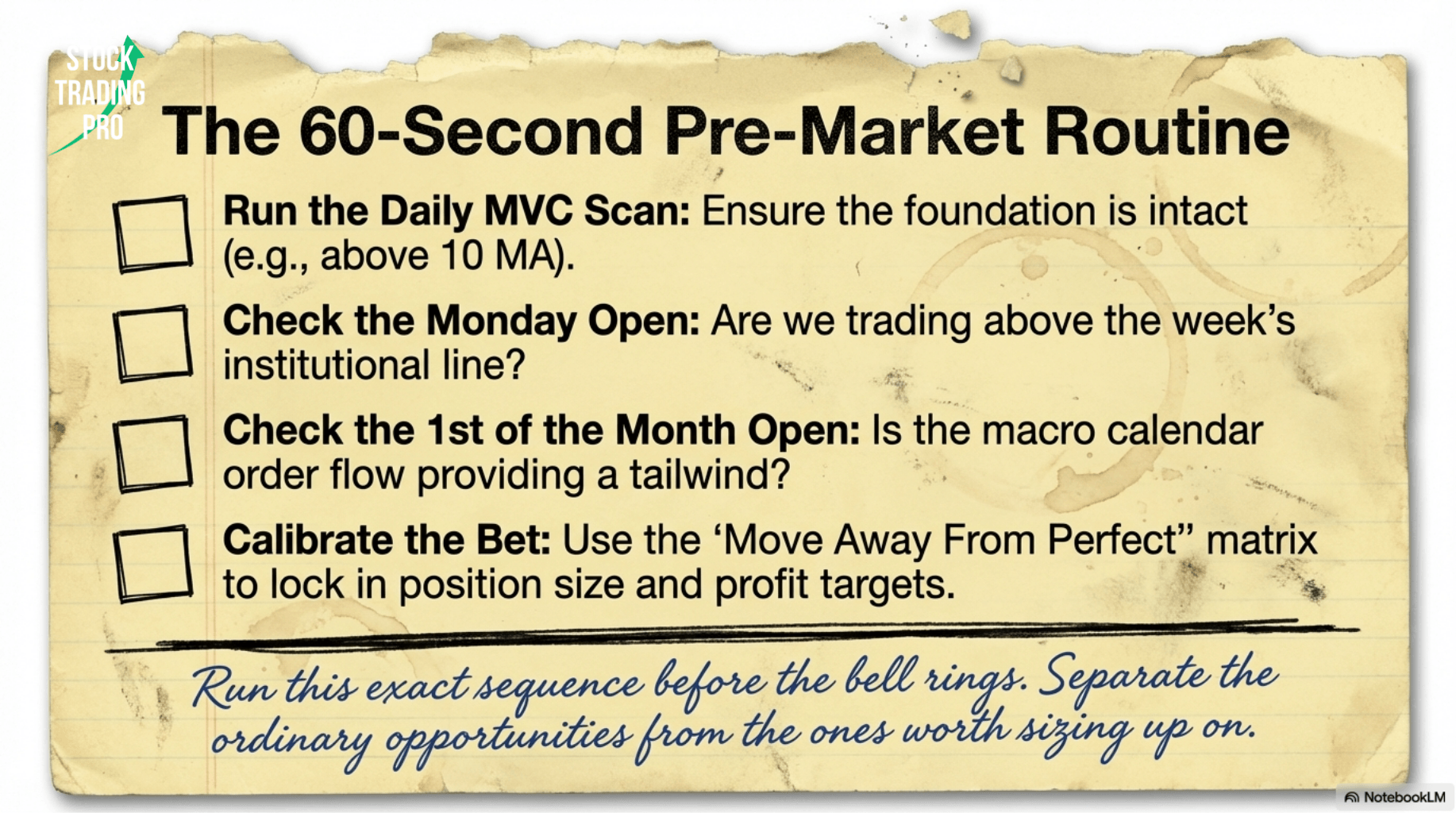
The Morning Game Plan | Practical Implementation
Pete describes how this is applied in real trading: during the morning preparation session, traders quickly assess the monthly and weekly charts for each stock on their watchlist. A fast green/red check on both timeframes feeds directly into that day's position sizing and conviction level.
Probability Boosters | What They Are and What They Aren't
Pete defines probability boosters as advanced, supplemental tools layered on top of minimum viable criteria — not a replacement for it. He's emphatic that traders should master foundational skills first before adding these layers. This is the "advanced class" and shouldn't distract from core execution.