
Introduction to the Stochastic Oscillator
Stochastic Oscillator is a widely used momentum indicator that compares a stock’s closing price to its price range over a specific period. Created by George Lane in the 1950s, it’s designed to reveal shifts in momentum before price itself begins to change direction. Traders use this tool to identify potential reversals and evaluate overbought or oversold market conditions.
Understanding the Stochastic Oscillator
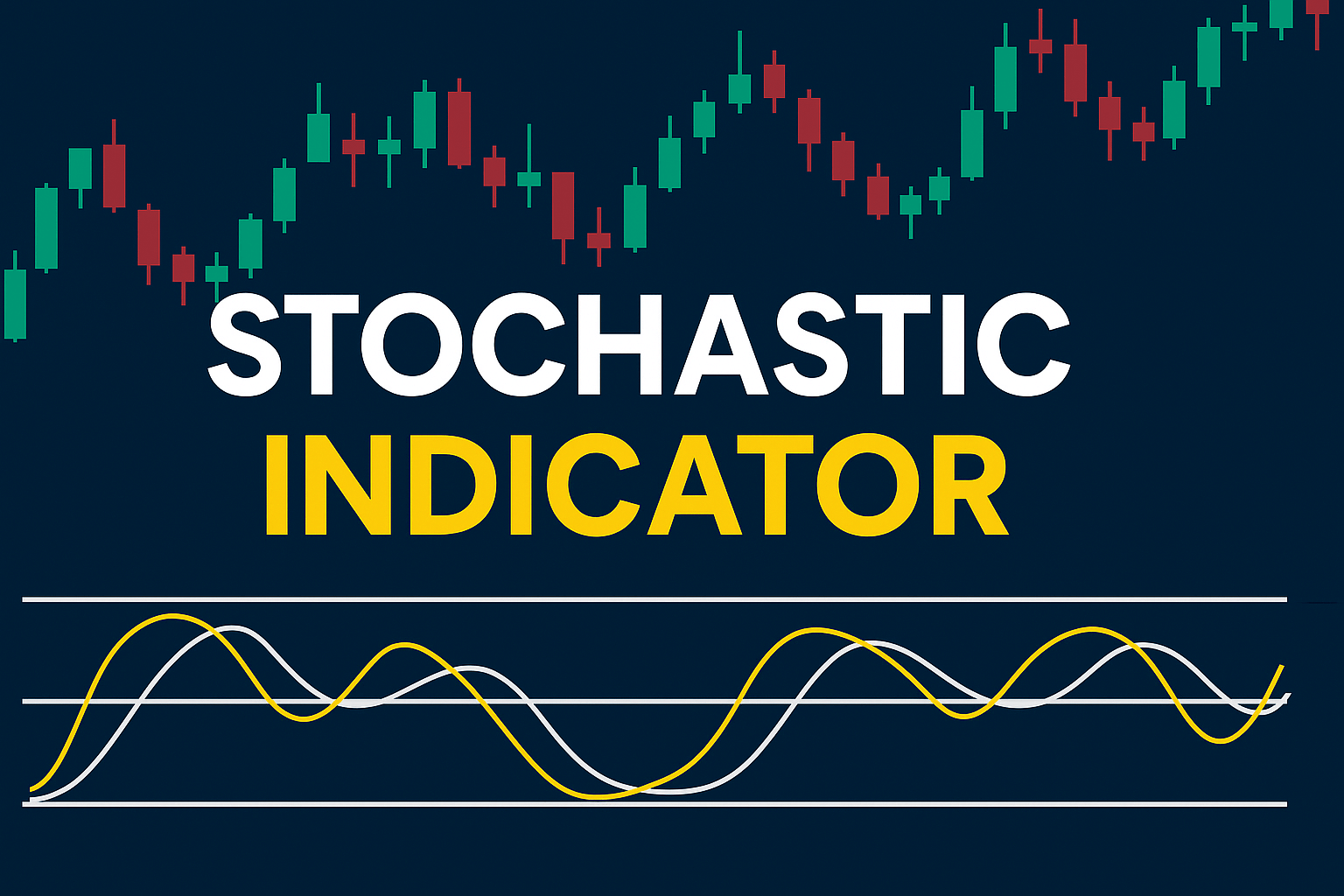
Stochastic Indicator consists of two key components: the %K line and the %D line. The %K line measures the current price's position relative to the high-low range over a period (usually 14 periods), while the %D line is a moving average of the %K line. When these lines cross, they often indicate potential turning points in market direction.
Stochastic Oscillator readings range from 0 to 100. A reading above 80 typically signals an overbought condition, while a reading below 20 suggests an oversold market.
Calculating the Stochastic Oscillator
Stochastic Indicator Formula begins with this calculation for the %K line:
%K = [(Current Close - Lowest Low) / (Highest High - Lowest Low)] × 100
Then, the %D line is derived as the 3-day simple moving average of %K. This smoothing mechanism helps reduce false signals, making it easier for traders to interpret momentum shifts with greater confidence.
For a technical walk-through of these calculations, see Corporate Finance Institute.
Applying this Indicator in Trading
Stochastic Indicator Strategy centers around identifying crossovers and divergences:
- When %K crosses above %D in oversold territory, it often signals a buying opportunity.
- Conversely, when %K crosses below %D in overbought conditions, it can signal a potential sell.
Divergence between the indicator and price action may also suggest a weakening trend and looming reversal. Traders often use the Stochastic Oscillator to confirm price patterns or breakout signals in trending markets.
Optimizing Stochastic Oscillator Settings
Oscillator Settings can be adjusted based on a trader’s strategy. The standard 14, 3, 3 setting works well for swing trading, but day traders may shorten the lookback period for more responsive signals. According to StocksToTrade, tuning the settings to match volatility and timeframe is essential for reliability.
Combining the Stochastic Oscillator with Other Indicators
Stochastic Oscillator and RSI work particularly well together. While both are momentum indicators, RSI focuses on price speed while Stochastics evaluates closing price range. Using the two in tandem can filter out false signals and improve timing.
Stochastic Oscillator vs. RSI comparisons show that when both indicate oversold or overbought conditions simultaneously, confidence in a trade setup increases.
Advantages and Limitations
Momentum Indicator advantages include its simplicity, visual clarity, and usefulness in identifying short-term turning points. It’s particularly effective in range-bound markets.
However, it also has limitations. In strongly trending markets, the oscillator can remain in extreme zones for extended periods, producing false signals. To mitigate this, traders often use additional filters or confirm trades with volume or price action.
Conclusion
Stochastic Oscillator is an essential momentum tool for traders across all styles. By learning to read %K and %D crossovers, adjusting settings for different timeframes, and integrating it with complementary indicators, traders can sharpen their edge and improve timing. As always, it’s most effective when combined with a disciplined, multi-indicator strategy.