Why Your Best Swing Trade Setups Keep Getting Stopped Out Only To Surge Without You.
Here is how the "Weekly Anchor" eliminates daily decision-making so your trades finally have the space to compound...
The harmless tweak you made to limit risk is the silent decision that is holding you back. The moment it went green, something shifted. Not confidence.
Fear.
Fear that the market would take it back. So you moved the stop, grabbed the small profit, and watched that trade run for weeks.
Unrealized gains can hurt more than a loss.
Without realizing it, you've built a trading process that demands attention around the clock.
You monitor positions during work hours because leaving them unwatched feels irresponsible.
You exit early when a trade moves against you because the pressure becomes unbearable.
You adjust stops mid-week because new information feels like it requires a new decision.
And every time, the trade you spent hours analyzing never gets the time it was built to use.
The need to do something becomes an obsession.
Trading follows you everywhere without a stopping point.
→ Into meetings.
→ Into dinner.
→ Into the hour before sleep when the week's positions loop in your head.
You wake up Monday already carrying last Friday's unresolved decisions, mentally drained before the market opens.
The knowledge is there. The analysis is often correct. But something between analysis and execution keeps breaking down.
The trading industry is built around one single idea: activity equals opportunity.
 Financial news gives you something “urgent” every morning. Social feeds have you chasing headlines. Daily price action creates fear of missing out.
All of them have one thing in common: they keep up the pressure to do something.
We call this The Activity Trap.
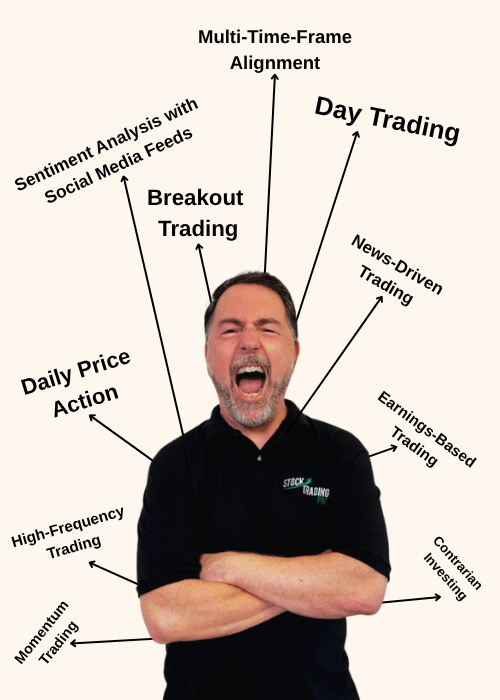
The Activity Trap confuses urgent decisions with good decisions, creating the illusion that more indicators, more monitoring, and more adjustments seems like discipline.
In reality, it systematically destroys the results your analysis was building toward.
As Jesse Livermore wrote in Reminiscences of a Stock Operator:
"It never was my thinking that made the big money for me. It always was my sitting.
Got that? My sitting tight!"
The Weekly Anchor was built on this exact distinction.
It doesn't add to the Activity Trap. It breaks it.
Instead of forcing you to react to daily market noise, the framework relies on a single Monday decision.

Hi, I'm Pete Renzulli
I've been in the trading business for over 26 years.
I became a full-time trader in April 2000 and went on to own one of the larger proprietary trading firms in New York City — Keystone Trading Group — where roughly 300 traders traded my capital.
Behind the firm's success, one question kept surfacing: why were institutions so consistently profitable, while retail traders struggled? The answer came through a collaboration with 25 former NYSE specialists, floor clerks, and brokers who traded under my roof.
Together, we reverse-engineered institutional trading behavior. Not theories. Not headlines. The actual mechanics behind consistent institutional profits.
That work became the foundation of the Weekly Anchor Method.
I built it for a specific kind of trader: the one who is ready to stop chasing complexity and run a structure.
Institutions, hedge funds, banks, and asset managers, operate with deep pockets and teams of research analysts.
What we discovered working with former NYSE specialists was that the smart money moves slowly.
When they decide to put money to work, they don't do it in a single day. They build positions methodically, over days, weeks, and months. That process leaves a trail of steady accumulation that pushes a stock higher before most retail traders even notice it's moving.
We call this Order Flow Stacking.
Spotting this institutional demand is what gives you the mathematical confidence to sit tight.
Instead of falling back into the Activity Trap and reacting to intraday noise, Order Flow Stacking puts your focus exactly where it belongs: shadowing the billions of dollars already doing the work.
But while Order Flow Stacking tells you where institutional money is moving, the Weekly Anchor tells you exactly when to get on board.
While most retail strategies chase entries based on price targets, breakouts, or indicator signals, the Weekly Anchor is built around a single reference point established Monday, one professional traders regard as the most critical marker of the week.
Every decision from Tuesday through Friday traces back to that one static point.
Not today's news. Not this morning's open. Not how the position feels right now.
One reference point. Established Monday. Trusted through Friday.
The Weekly Anchor never asks you to predict where the stock is going.
It allows you to shadow where institutional order flow is already stacking, and stay anchored to the plan while it works.
The Weekly Anchor was built on a different premise.
One price. The entire week.
Instead of chasing a moving target, the system relies on a Static Reference Point. Every decision; where to enter, where the stop lives, when to add to a winning position, and how to trail it toward Friday traces back to this single number established on Monday.
The Weekly Anchor completely eliminates the urge to tinker by giving you nothing to tinker with. The reference point doesn't change, and the plan doesn't change. The only thing to watch is the institutional order flow.
Once the week begins, the system uses Progress-Locked Adjustments. You only interact with the trade if it is actively working in your favor.
The system pre-plans the exact levels to add to the position and trail the stop, mathematically locking in your progress without ever locking you out of further gains.
Conversely, if a trade moves against you, the system relies on the initial stop loss. You don't adjust, and you don't hope.
This works because it forces a clean outcome: the trade either recovers on its own, or it stops out exactly where planned—turning a loss into a controlled business expense rather than a mid-week crisis.
That is the Weekly Anchor difference.
It fundamentally changes the relationship between the trader and the trade; one where you're managing the process now, not the price action.
"Weekly Anchor" stocks have generated months of gains in as little as five days.
It's the obvious choice for traders who can't watch the market during the day.
These are real Weekly Anchor trades from recent weeks — scanned on Monday, managed by script, exited on Friday.
No interpretation. No emotion. Just the structure doing what it was built to do.
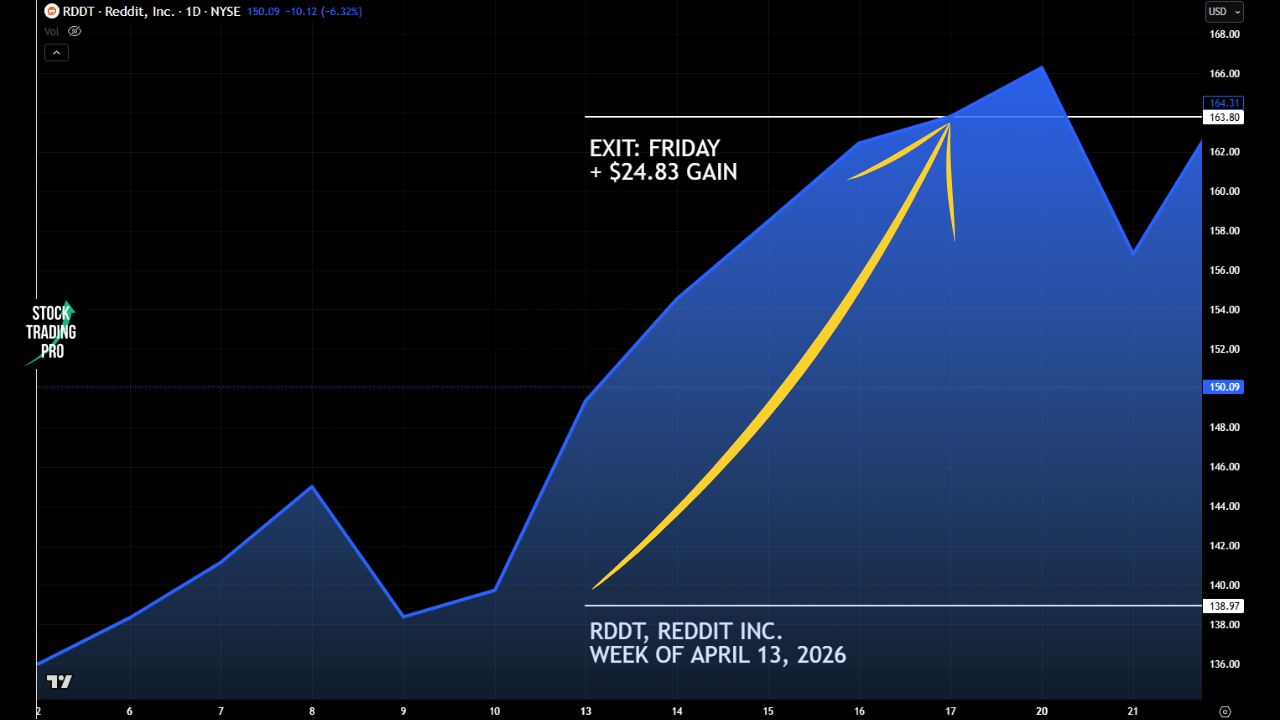
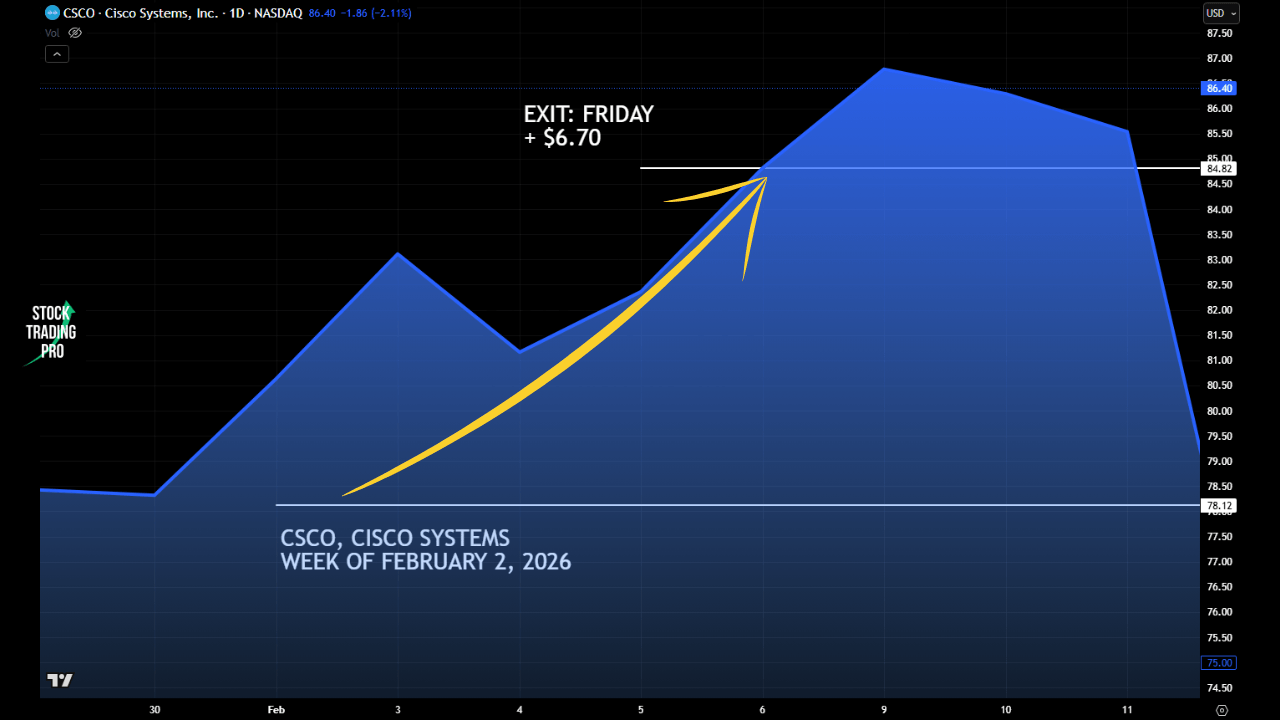
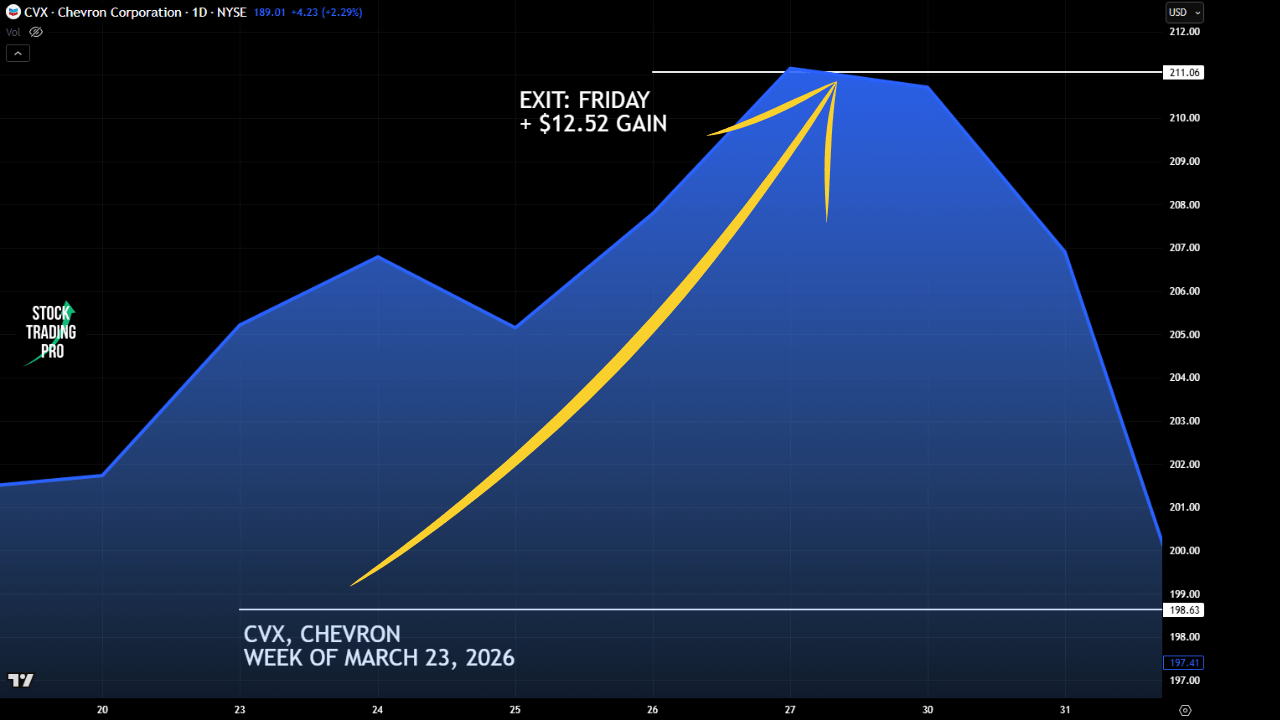
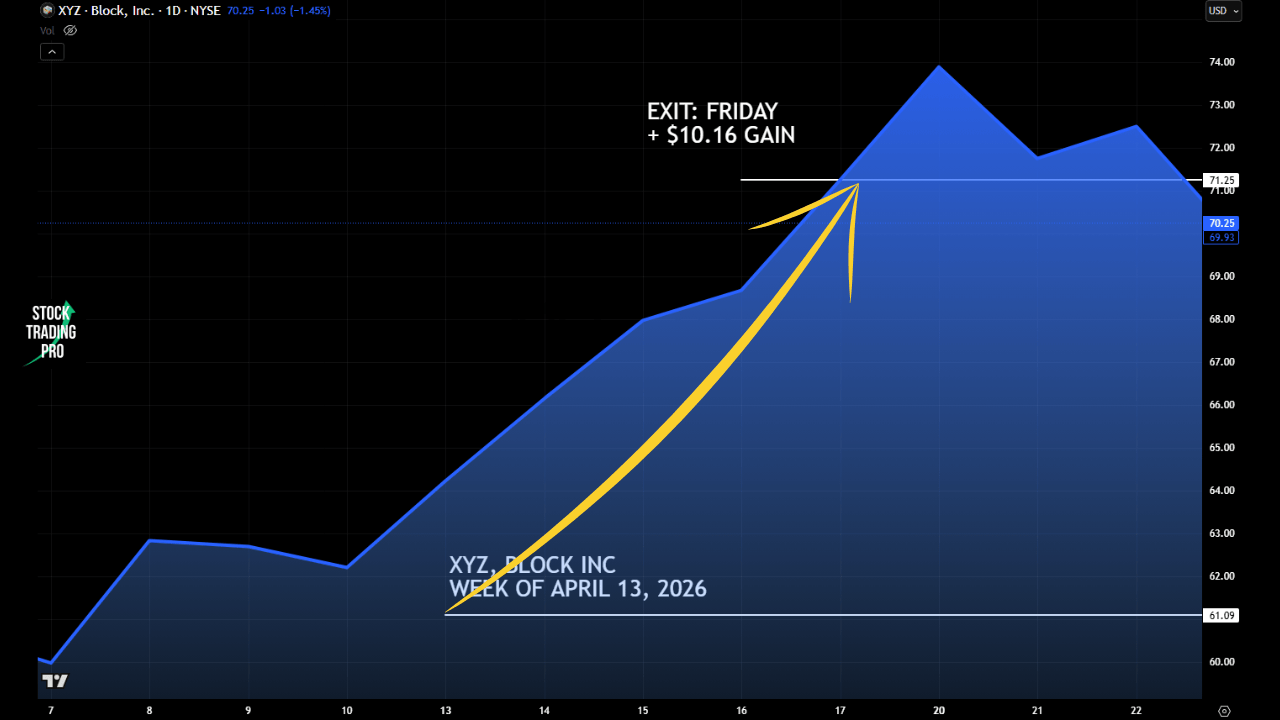
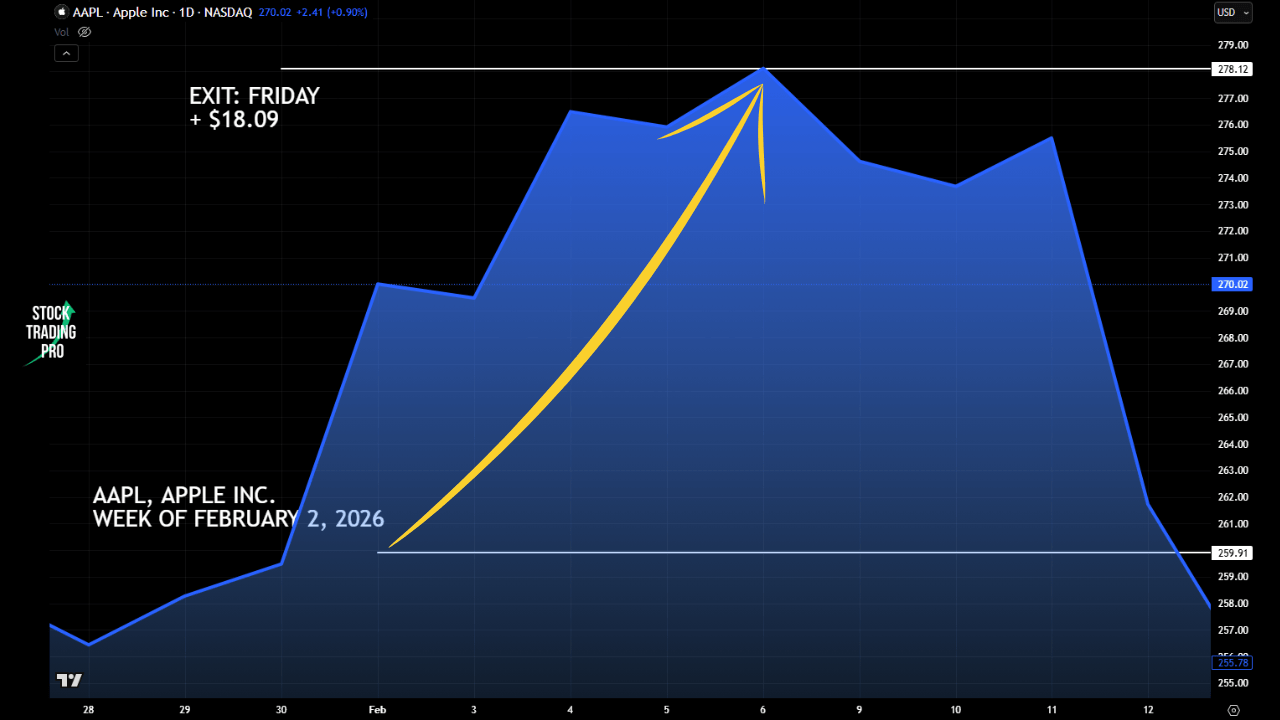
Every one of these trades started as a Monday-night scan result. Every one was entered with a predetermined stop loss, position size, and target — before the market opened Tuesday. Every one exited on plan.
That is the Weekly Anchor rhythm.
5 Days
Monday Through Friday
1 Setup
The Weekly Anchor
3 Steps
Buy, Adjust & Sell
45 min
Per Week Total Time
What This Actually Feels Like on a Tuesday Morning
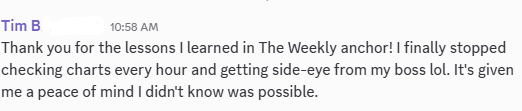
"I finally stopped checking charts every hour. It's given me a piece of mind I didn't know was possible."
-Tim B.
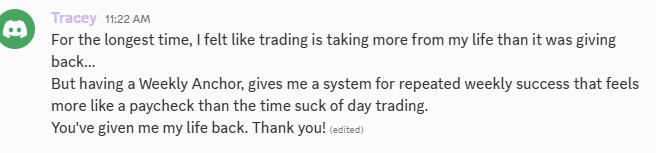
"Weekly anchor gives me a system for repeated weekly success that feels more like a paycheck than the time suck of day trading. You've given me my life back."
-Tracey

"Your course is fantastic, what I've learned from you saved me about $15,000"
- Mike G

"My risk on the trade was only $200 and turned into $532 in just 5 days. I'm so happy to have finally found something that works."
-Hal W.

"Weekly Anchor Course is fantastic .. full of AHA's"
-Alice I.
The Weekly Anchor
$49. One-time. Lifetime access.
If you've been trading for more than a year, you've probably spent somewhere between $500 and $5,000 on courses, alert services, and subscriptions that didn't work.
The Weekly Anchor is $49.
It is not priced that way because it is worth $49.
It is priced that way because I want cost to stop standing between a serious trader and a system that actually executes.

My 14-Day Money Back Guarantee
I'm so confident the Weekly Anchor Strategy gives you a clear, systematic approach to Monday - Friday swing trading that I'm offering a full 14-day money-back guarantee.
If you're not completely satisfied with the clarity and systematic approach you've gained, simply email our support team within 14 calendar days for a full refund.
I would rather refund a trader who isn't a fit than take money from someone who arrived at this page with the wrong expectations.
No complicated forms. No hassles.
Fun Fact: Less than 1% of Weekly Anchor students have requested a refund! It's that simple to implement.
 14-Day Money-Back Guarantee Instant Access Lifetime Access
Start Trading With a System,
Not Your Emotions
The Weekly Anchor Method
 All 9 Core Training Modules:
(90 minutes of focused instruction — no filler) The Quick Start Implementation Guide:
Monday Entry Checklist, Emergency Exit Scenarios, Quick Reference Formulas The Weekly Anchor Position Calculator:
Fill-in-the-blank form that outlines every decision to be made before you risk a dollar Instant digital access:
You start in the next 5 minutes 14-day money-back guarantee
if it is not what this page describes, you get every cent back, no questions
| |
Have questions?
Email us:
[email protected]
Refund Policy and Delivery | Terms of Service | Disclaimer | Privacy Policy
(C) Copyright 2026 Stock Trading Pro LLC
IMPORTANT DISCLOSURE: All trading involves substantial risk of loss. Stock trading can result in the complete loss of your investment. Past performance does not guarantee future results. The performance results shown reflect historical back-tested and actual trading results and are not indicative of future performance. Individual results may vary significantly. The information provided is for educational purposes only and should not be considered personalized investment advice. Always consult with a qualified financial advisor before making investment decisions.